






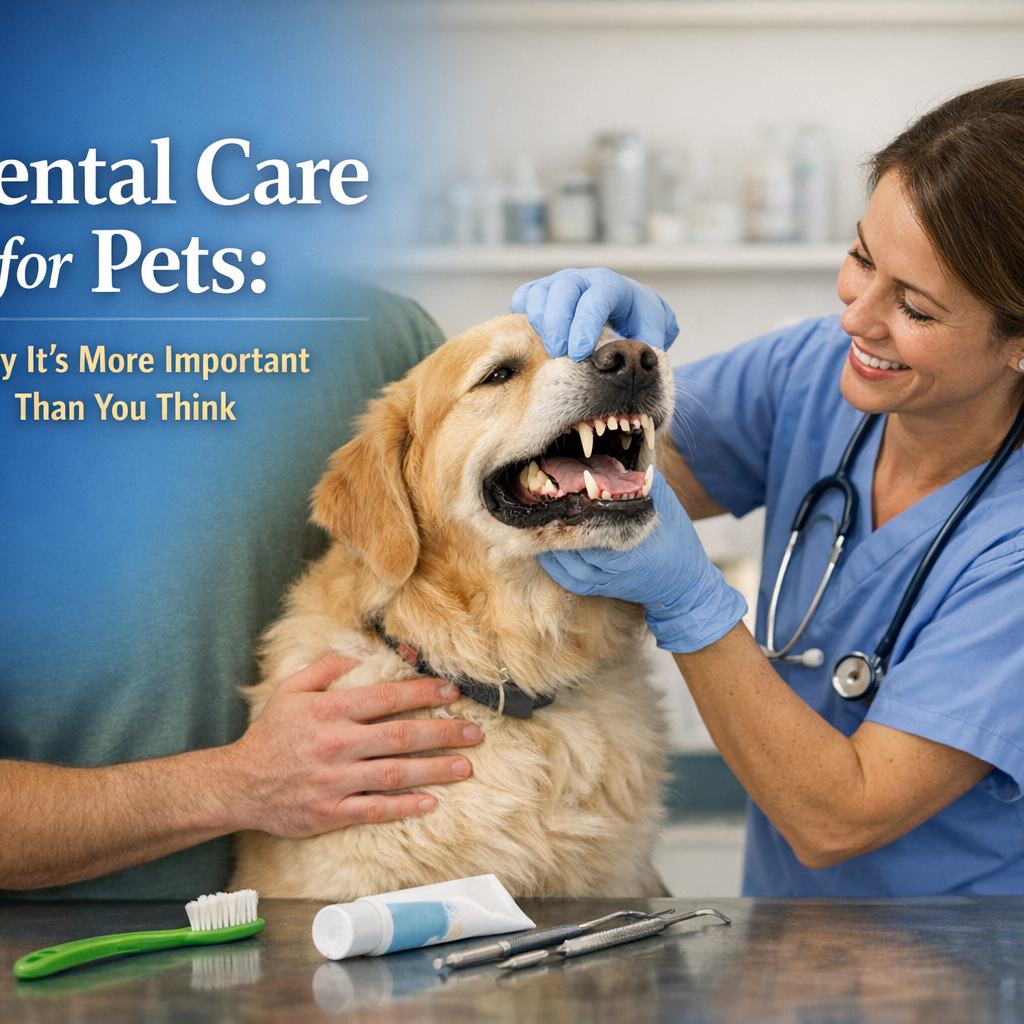
Dental Care for Pets: Why It’s More Important Than You Think
Introduction
When it comes to caring for our pets, we often focus on nutrition, exercise, and regular vet visits. However, dental care tends to be overlooked, even by the most loving pet owners. Many people don’t realize that oral health is just as crucial for pets as it is for humans. Dental disease can lead to serious health issues, affect your pet’s quality of life, and even shorten their lifespan. In this blog post, we’ll explore why dental care for pets is so important and how you can keep your furry friends smiling and healthy.
Understanding the Importance of Pet Dental Health
Many pets, especially dogs and cats, experience dental issues by the time they are three years old. Common problems like plaque buildup, tartar, and gum disease can develop quickly without proper oral hygiene. These issues don’t just cause bad breath — they can result in pain, infection, tooth loss, and even affect your pet’s organs such as the heart, liver, and kidneys.
Signs Your Pet May Have Dental Problems
Since animals can’t tell us when something is wrong, it’s important to watch for signs that could point to dental disease. Common symptoms include:
– Bad breath
– Red or bleeding gums
– Drooling or dropping food
– Discolored teeth
– Swelling around the mouth
– Difficulty eating or loss of appetite
If you notice any of these signs, it’s time to schedule a dental check-up with your veterinarian.
Consequences of Ignoring Pet Dental Care
When dental problems are ignored, bacteria from the mouth can enter the bloodstream, potentially causing damage to major organs. Advanced dental disease can also cause chronic pain and affect your pet’s overall mood and activity level. Untreated oral infections are not only painful but can become life-threatening if left unaddressed.
How to Care for Your Pet’s Teeth at Home
Regular veterinary dental cleanings are important, but home care is crucial for prevention. Here are some effective ways to keep your pet’s teeth healthy:
1. **Brush their teeth regularly** – Use a pet-friendly toothbrush and toothpaste. Daily brushing is best, but even a few times a week can make a difference.
2. **Dental chews and toys** – Choose products that promote dental health by helping to remove plaque and massage the gums.
3. **Diet** – Feed a balanced diet and consider dental diets approved by veterinarians.
4. **Routine checks** – Regularly inspect your pet’s mouth for any changes or abnormalities.
Consult your vet for the most suitable dental care routine for your pet’s breed and age.
Regular Professional Dental Cleanings
While home care is important, regular professional cleanings under anesthesia are sometimes necessary. Your vet will thoroughly examine your pet’s mouth, remove tartar and plaque, and check for underlying problems that aren’t visible to the naked eye. This proactive approach can prevent minor issues from turning into major health concerns.
Making Dental Care a Habit
Just like with humans, dental care for pets should be a part of their routine wellness. Getting your pet accustomed to mouth handling at an early age can make the process much easier for both of you. Establish a schedule and stick to it, rewarding your pet for good behavior during brushing or dental check-ups.
Conclusion
Dental care for pets is much more important than most people realize. By maintaining good oral hygiene, you’re not just keeping your pet’s breath fresh—you’re protecting their overall health, comfort, and enjoyment of life. Prevention and early intervention are key in avoiding the pain, expense, and health risks that come with dental disease.
Looking for ways to simplify your pet care routine? Our app, Luccy, is here to help you keep your pet happy and healthy. With AI-driven reminders and personalized pet care tips, Luccy ensures that your furry friend’s dental health and wellness needs are never forgotten. Give it a try and see how easy pet care can be!